An Ecosystem for Building Empathy and Support in Eating Disorder Care
How might we create accessible emotional support for individuals healing from eating disorders?
HEED is a concept project centered around the idea of an “emotional band-aid” - a form of emotional first aid designed to support individuals affected by eating disorders. Beyond raising awareness of emotional well-being, the project explores long-term tools and support systems that can assist both individuals in recovery and the loved ones who play a critical role in prevention, treatment, and healing.
MY ROLE
Solo-led Project

Research
Expert interviews with psychologists and social workers, plus market research

Strategy
Synthesized insights into a holistic support concept and experience strategy

System Design
Mapped how digital and physical touchpoints work together

Prototyping
Built three outcomes: a boardgame, companion app, and reflection kit

Usability Testing
15 participants tested across all three outcomes
RESEARCH
Eating disorders are shaped long before diagnosis - by the messages we absorb and the support systems around us
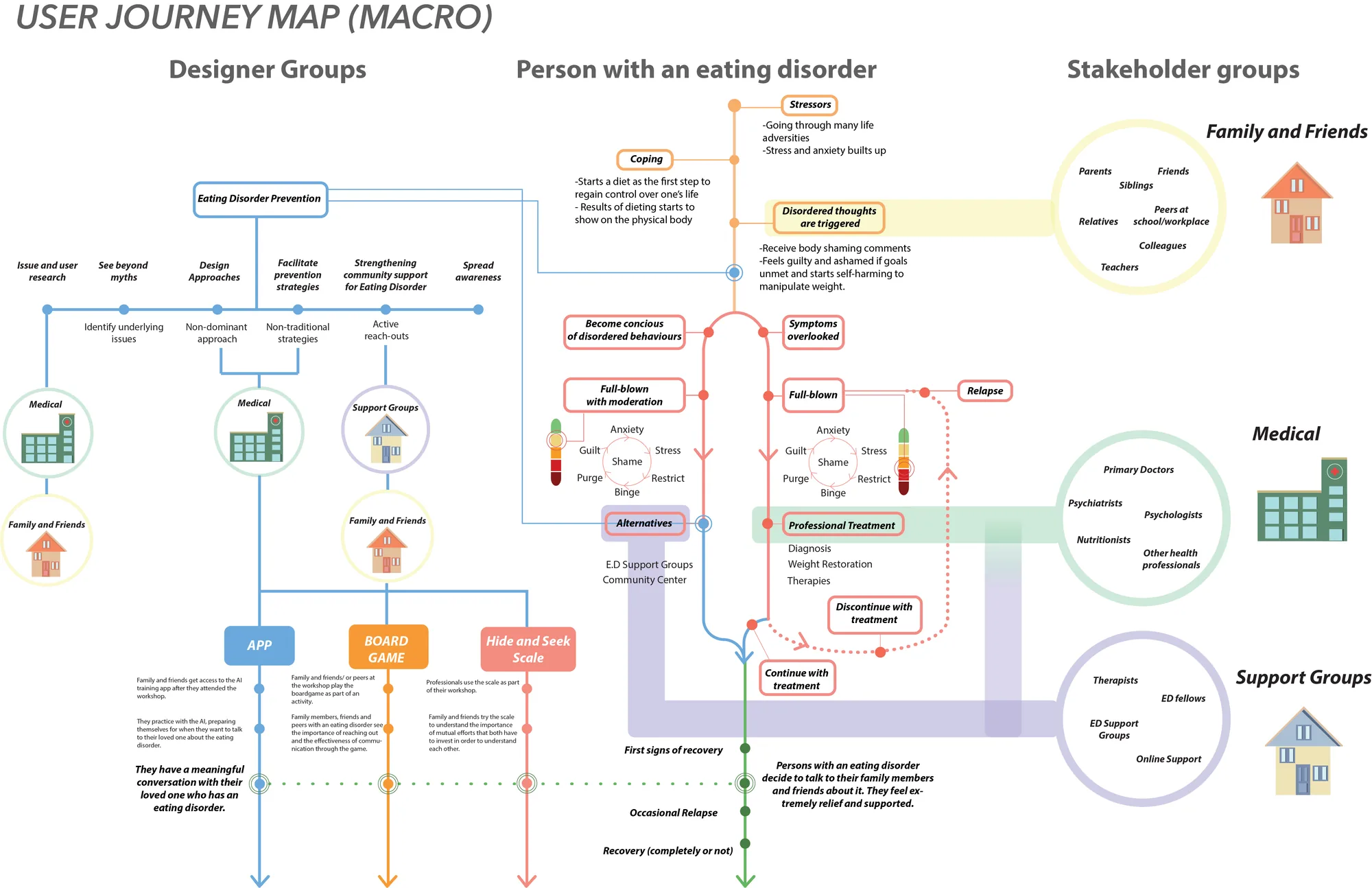
PATIENT JOURNEY
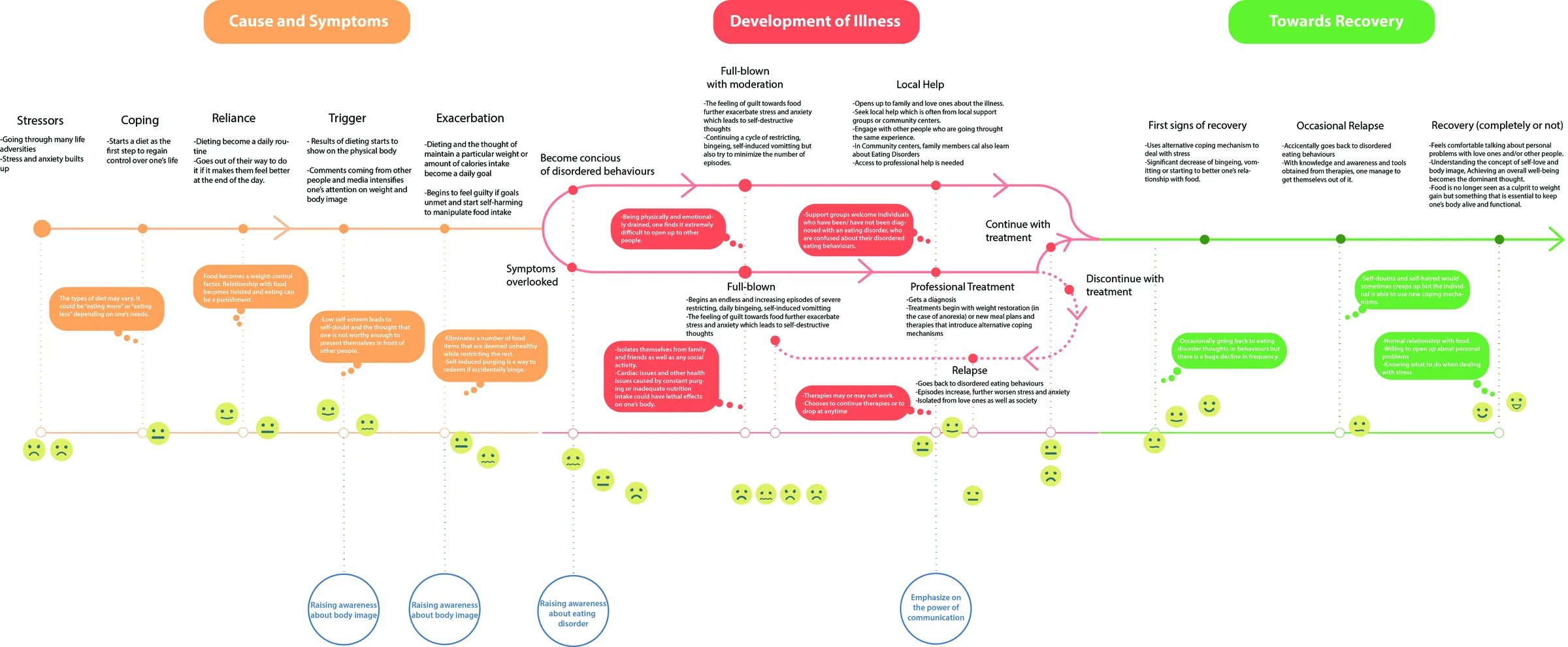
WORKSHOP ACTIVITIES
I facilitated a workshop and conducted expert interviews to understand and identify what situations, moods, and events may trigger irregular eating habits in a healthy person, and whether they share patterns with early signs of eating disorders
Group Brainstorming
Mapping causes of loss of appetite and absence of hunger.

Emotional confusion blurs the line between emotional needs and physical hunger.
Family role-play
Empathizing with each character's perspective across early-sign scenarios.

Families need education in empathy-based approaches, not just crisis response.
Quick design challenge
Rapid solutions using a set of provided objects and mindsets

Existing technology can support recovery and family involvement is a design opportunity.
EXPERT INTERVIEW INSIGHTS
Better awareness leads to better prevention
"If people have information and education, they can support their family members and friends to seek treatment before it becomes too problematic. Rather than prevention, it is more about awareness that we are talking about."
There are many access gaps in current care model
"General doctors lack understanding and awareness of eating disorders. Public Programs have an endless waitlist, while private service is unaffordable for many individuals."
Design can address isolation and communication, and doing so meaningfully could challenge the cultural messages that shape our body image.
"People stop an ED when they have enough support and when their lives work well enough to stop the eating disorder, when they have a reason/meaning to stop it, for oftentimes, it might be a little bit of addiction. From a design perspective, communication is extremely important. Isolation is a huge issue across the board for ALL mental health illnesses. Anything that could help with that. Socio-cultural factors play a huge role. There are different levels of prevention and intervention, focusing on changing the cultural structure and closely examining how the body is treated."
WHAT PATIENTS FEEL AND WHAT SOCIETY AND PEOPLE AROUND THEM SAY
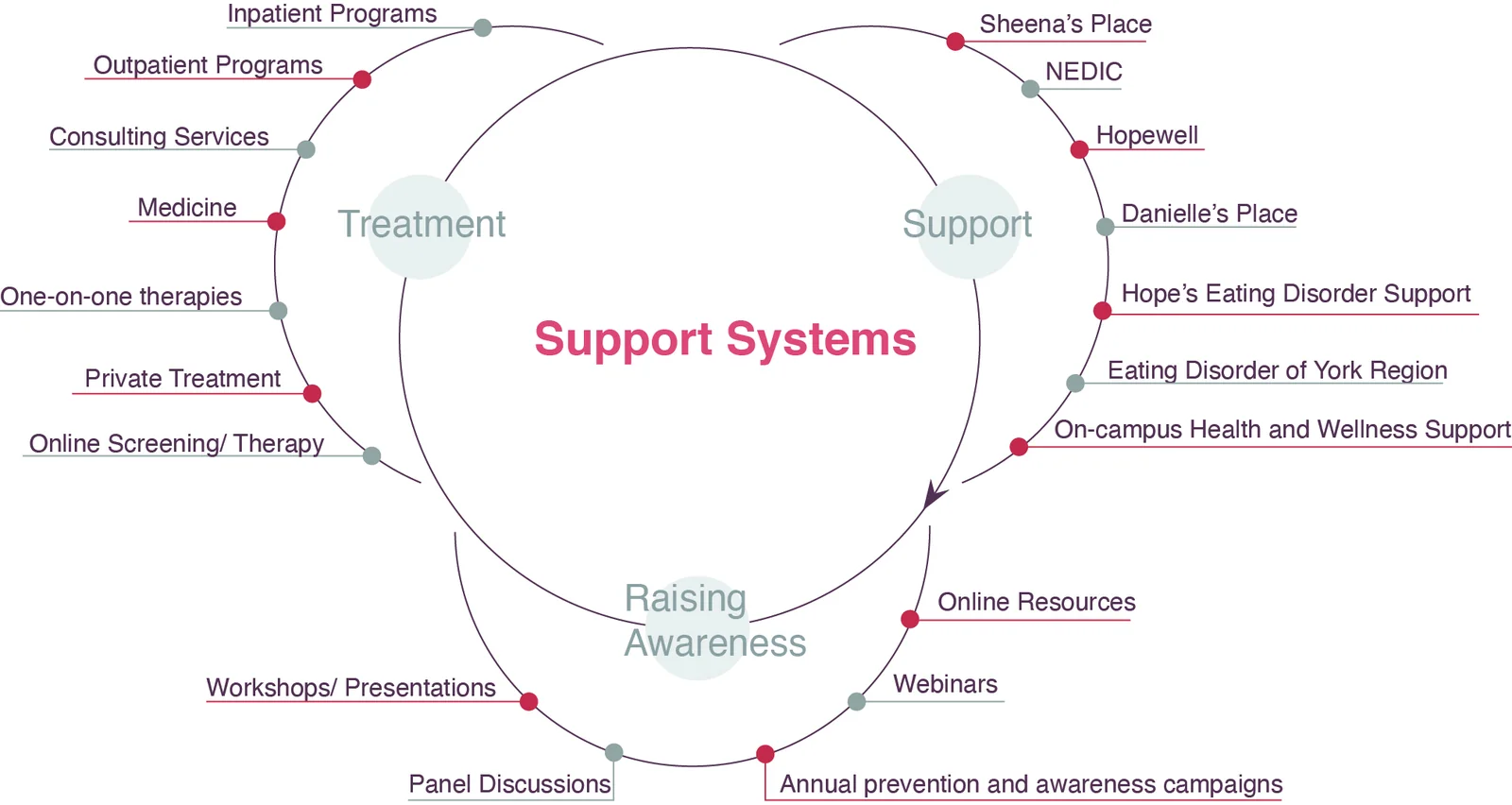
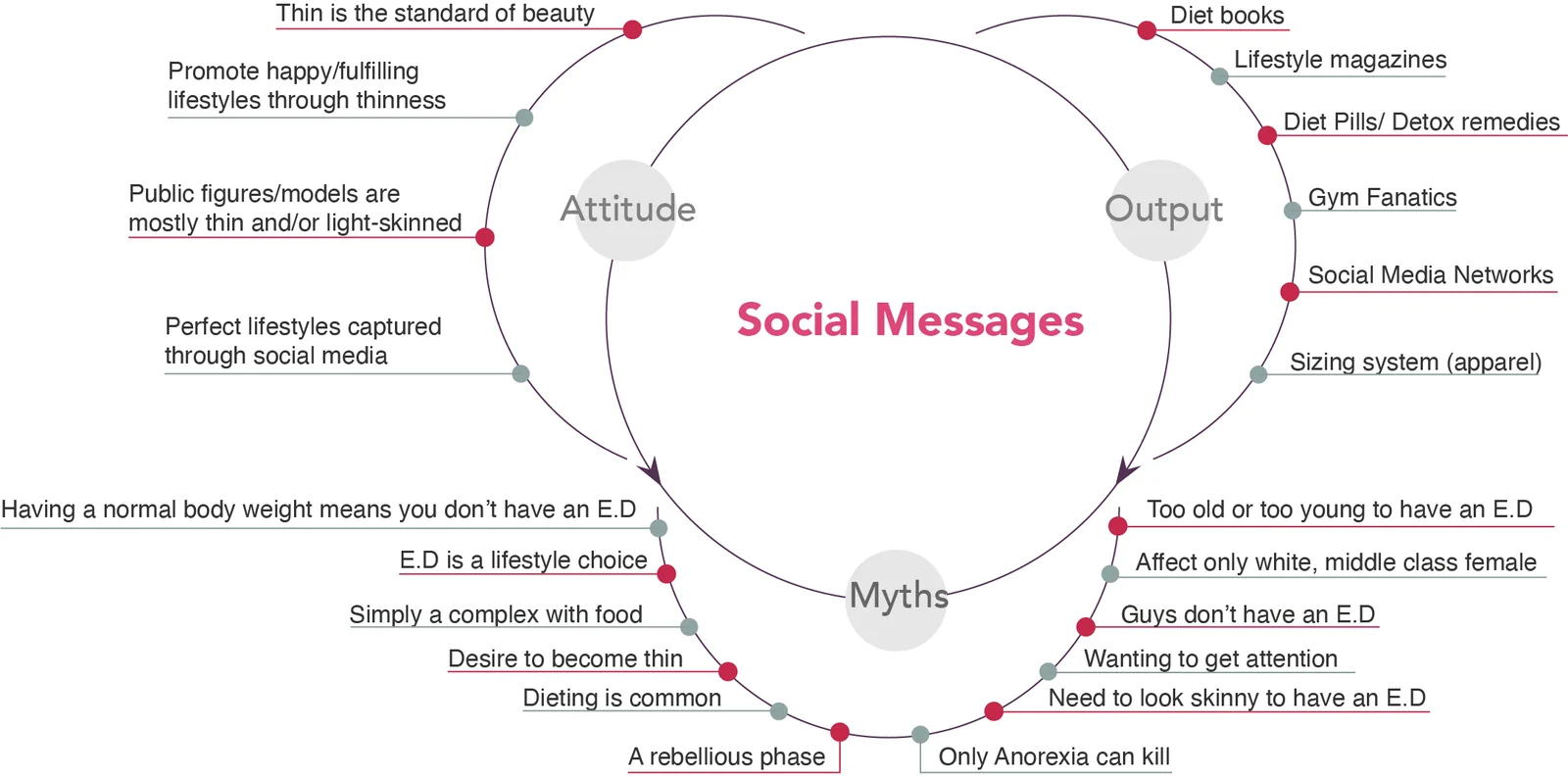
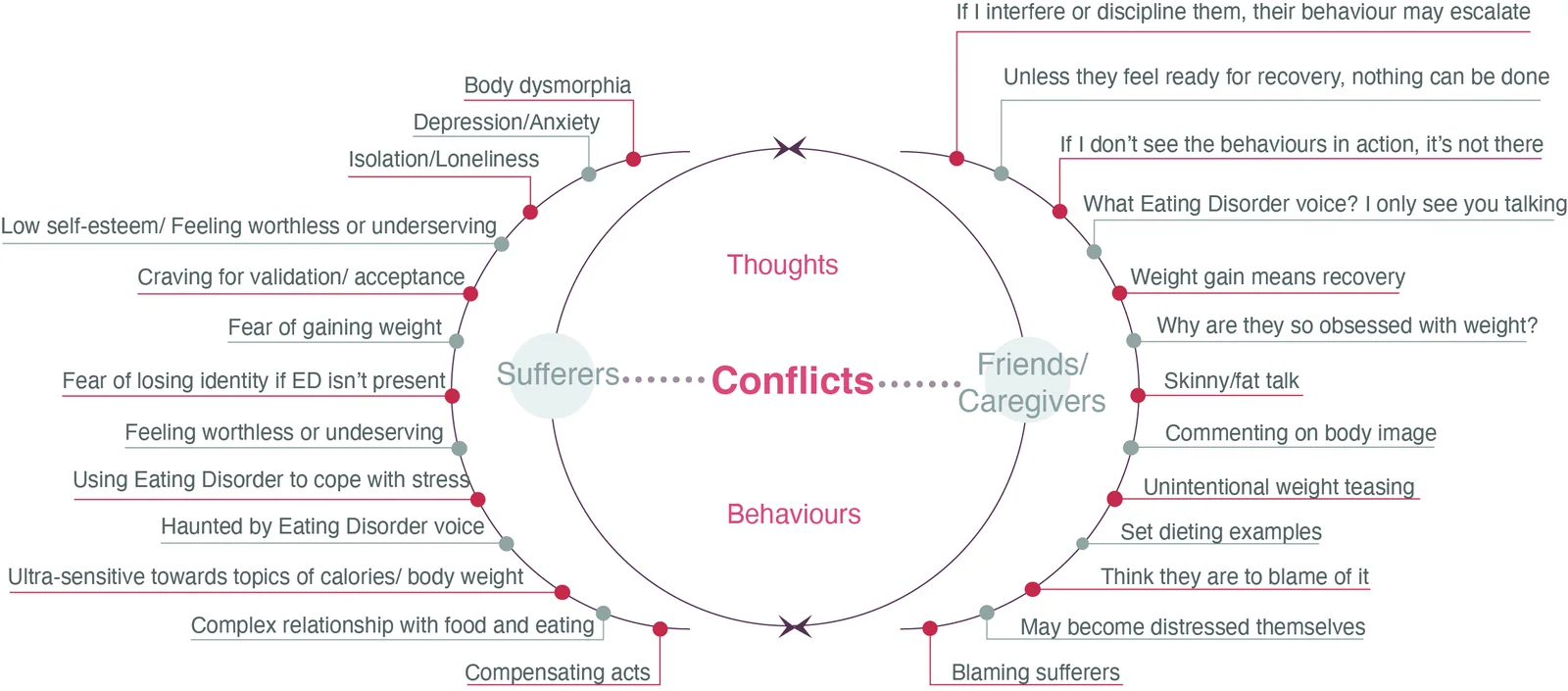
How can design address a mental health problem which has no one-fit solution?
DESIGN
The outcome doesn't offer a treatment
It designs for the conversation that makes treatment possible.
Each design principle is shaped directly by what the research revealed about where communication breaks down
IMPACTFUL
Participatory design that reaches a wide audience through communication
THOUGHT
PROVOKING
Prompts self-reflection and challenges assumptions about body image
EDUCATIONAL
Addresses cause and effect, media culture, and eating disorder awareness
Three Design Concepts - Exhibilited at DesignTO 2019 - OFFCOURSE
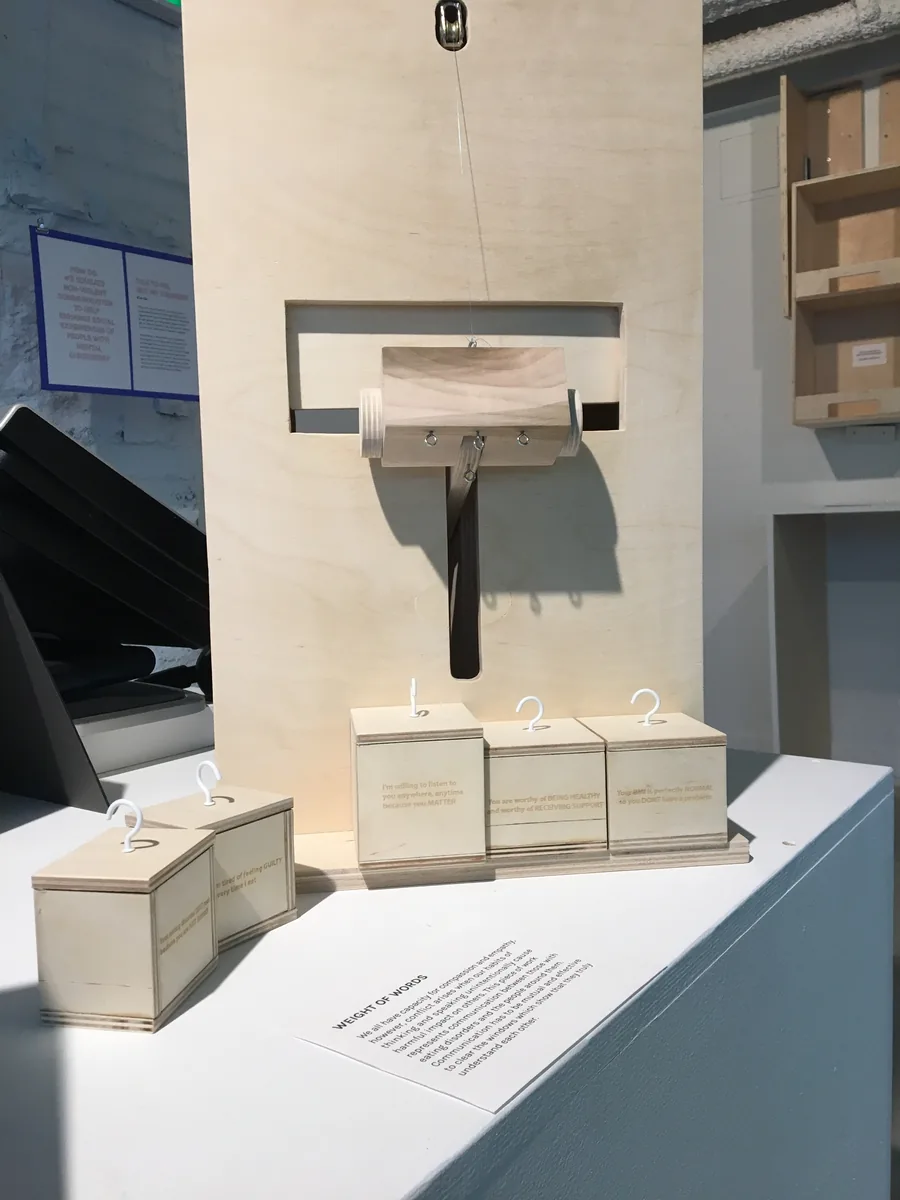
Critical Object - Designing for empathy in shared space
invite people to pause, engage, and practise thoughtful communication with someone experiencing a mental health disorder.
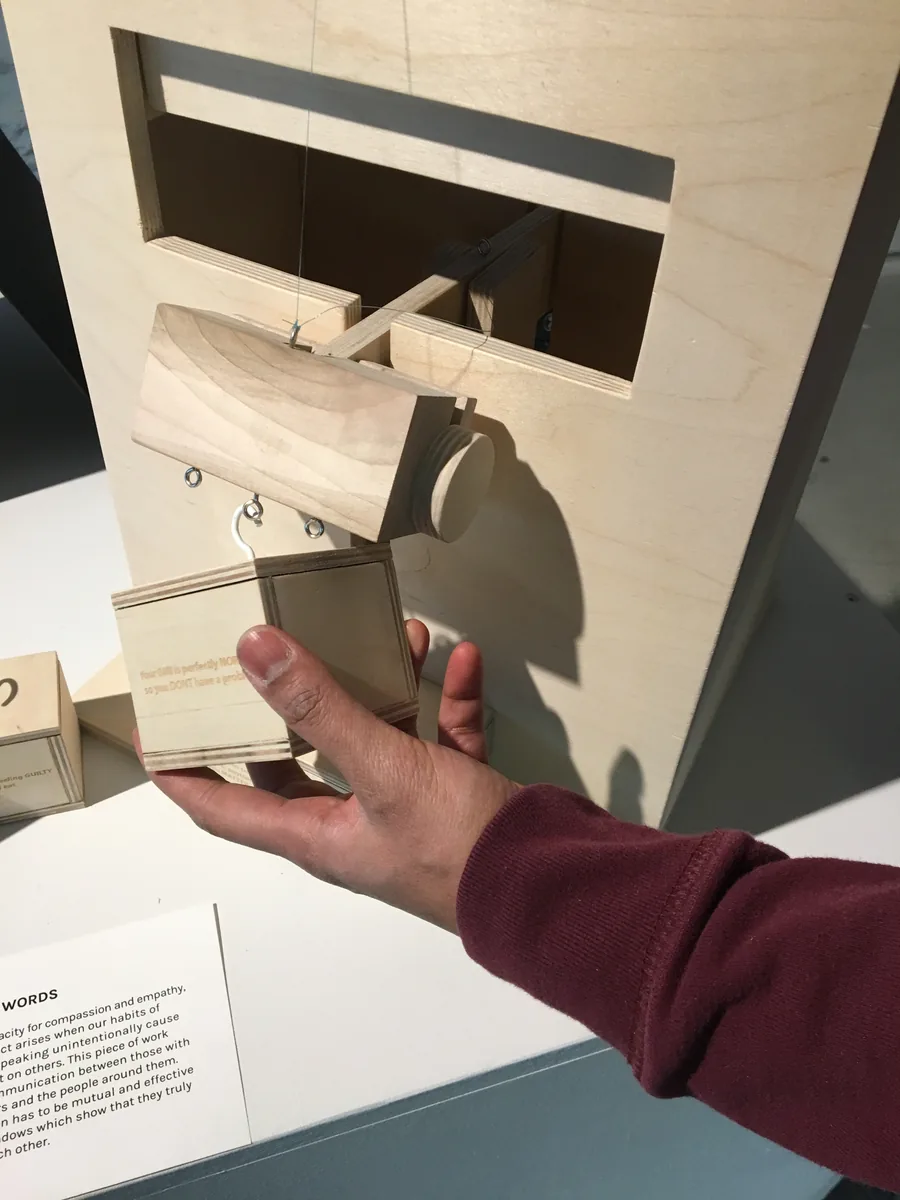
WEIGHT OF WORDS
Hide and Seek Scale makes miscommunication tangible. Each weight represents a word - when one side carries more than the other, a screen rises, blocking both parties from seeing each other. Balance is only achieved when both invest equally in finding the right words. For someone with an eating disorder, that moment of mutual visibility could be the first step toward asking for help
Board Game - Teaching what therapists and media cannot
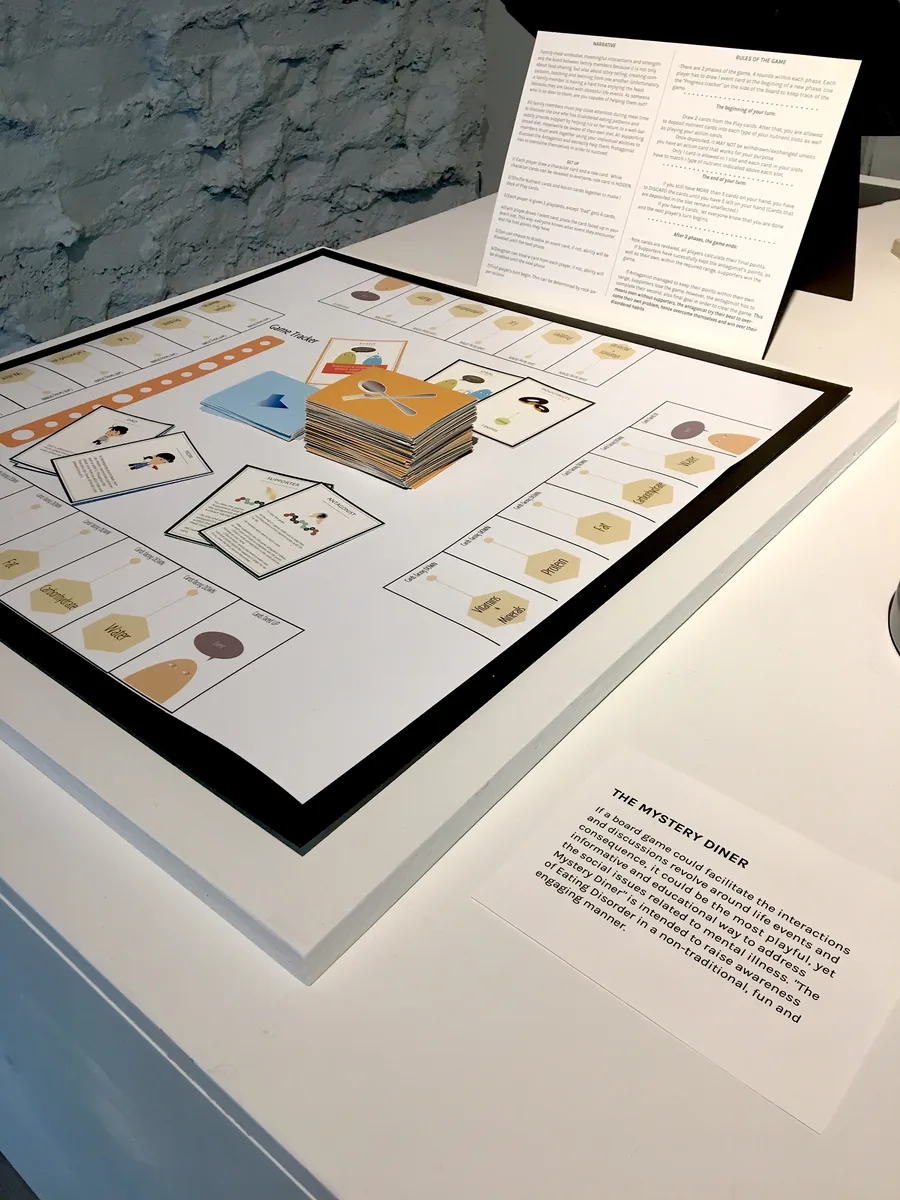
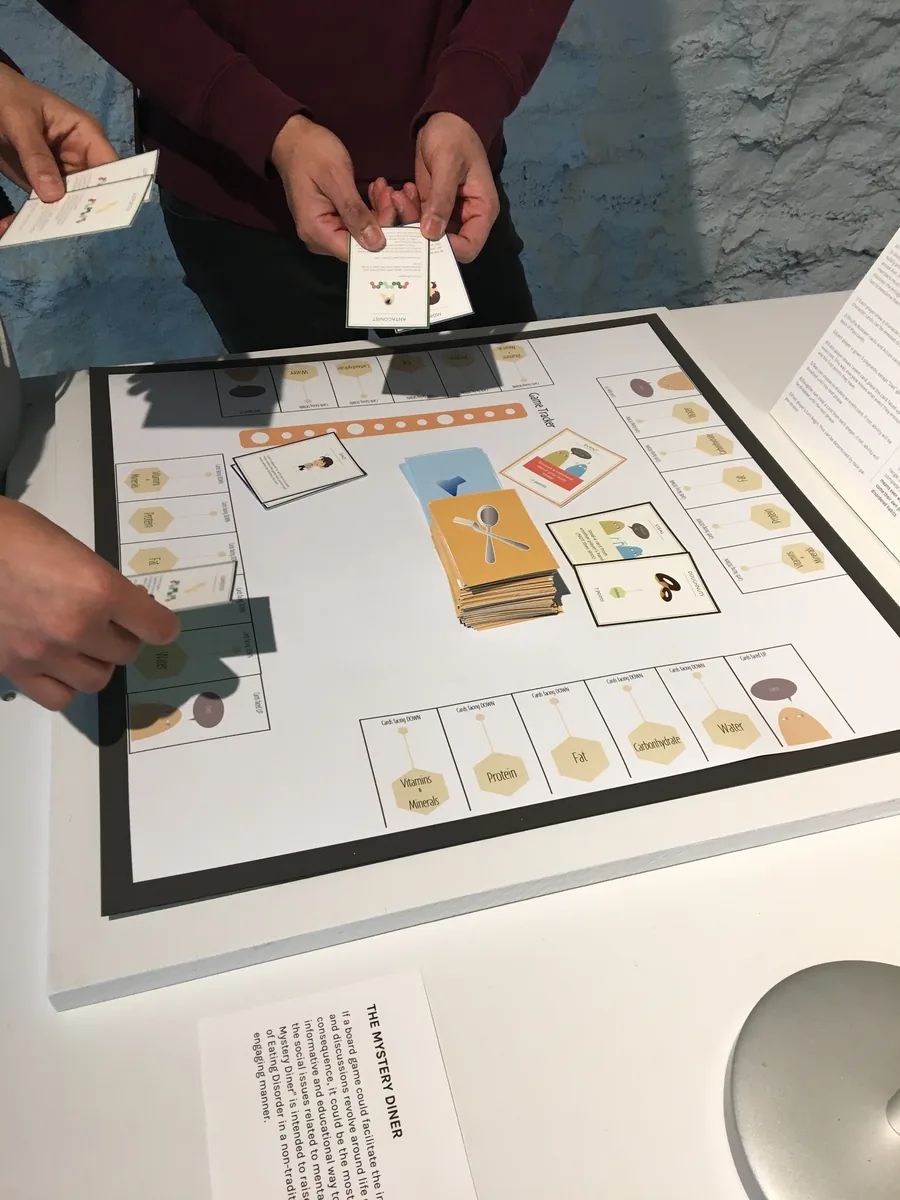
When meaningful discussion about life events, consequences, and mental health happens through play, it becomes the most disarming and effective form of education. The game brings people with and without eating disorders into the same conversation
MYSTERIOUS DINER
A board game that opens the conversations therapists and media have struggled to start. By working through real-life events and their consequences through play, it creates a space where meaningful discussion about eating disorders can happen naturally
An AI Tool - Conversation guidance for family and loved ones
Despite guidance from professionals and books, real conversations still go wrong. This early-intervention tool gives friends and family the questions, word choices, and attitudes they need, so that when someone confesses their eating disorder, the response helps rather than harms.
TALKIE
Talkie is a chatbot designed for everyone around the patient - family, friends, and those who aren't sure what they're experiencing yet. Whether you're hearing about eating disorders for the first time or trying to find the right words for someone you love, Talkie meets you where you are and guides the conversation from there.
From the first stressor to recovery:
Each concept supports the users at multiple touch points
Design Iterations
Critical object
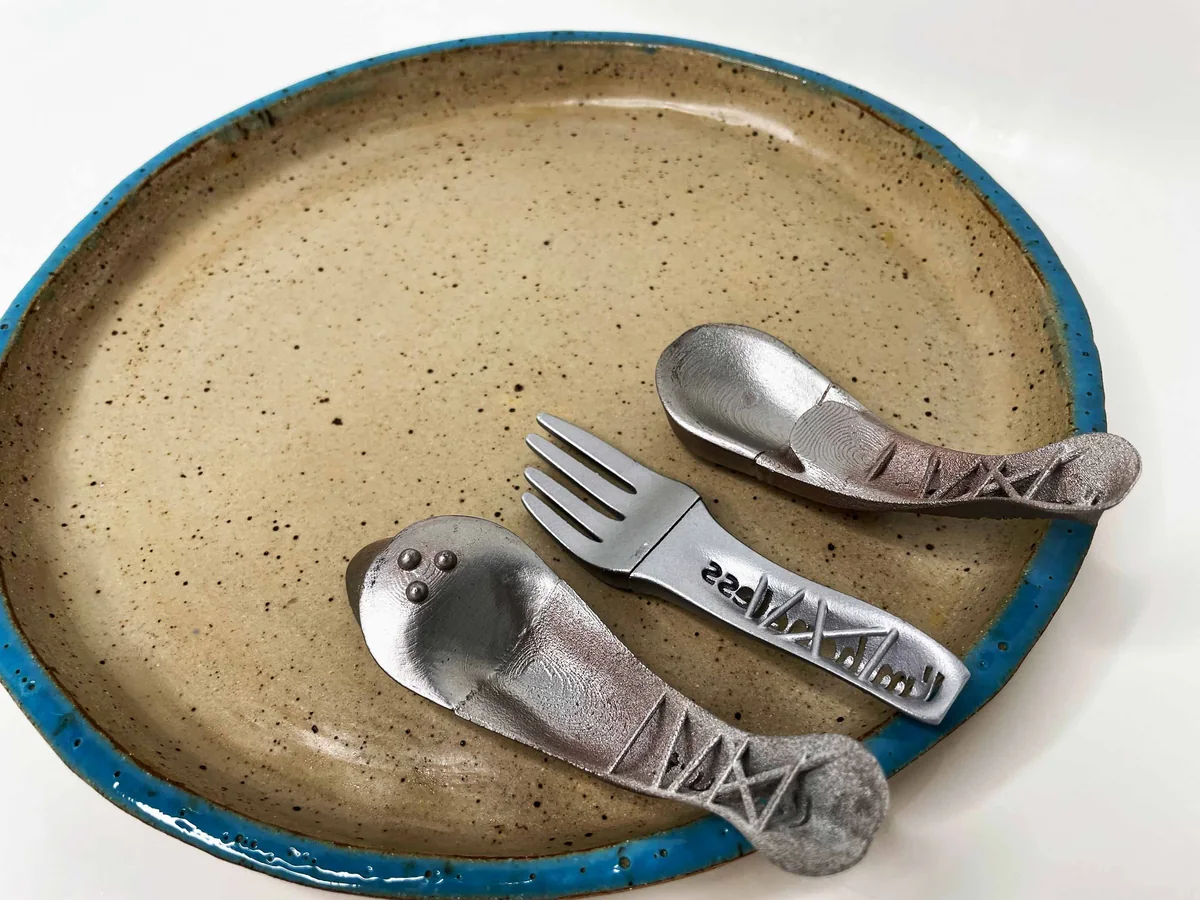
The 'weight of words' evolved into a collection of sympathetic eating utensils - each one designed to embody the frustrations and struggles of someone with an eating disorder, creating a more intimate and emotionally resonant interaction.
Design Iterations
Board game
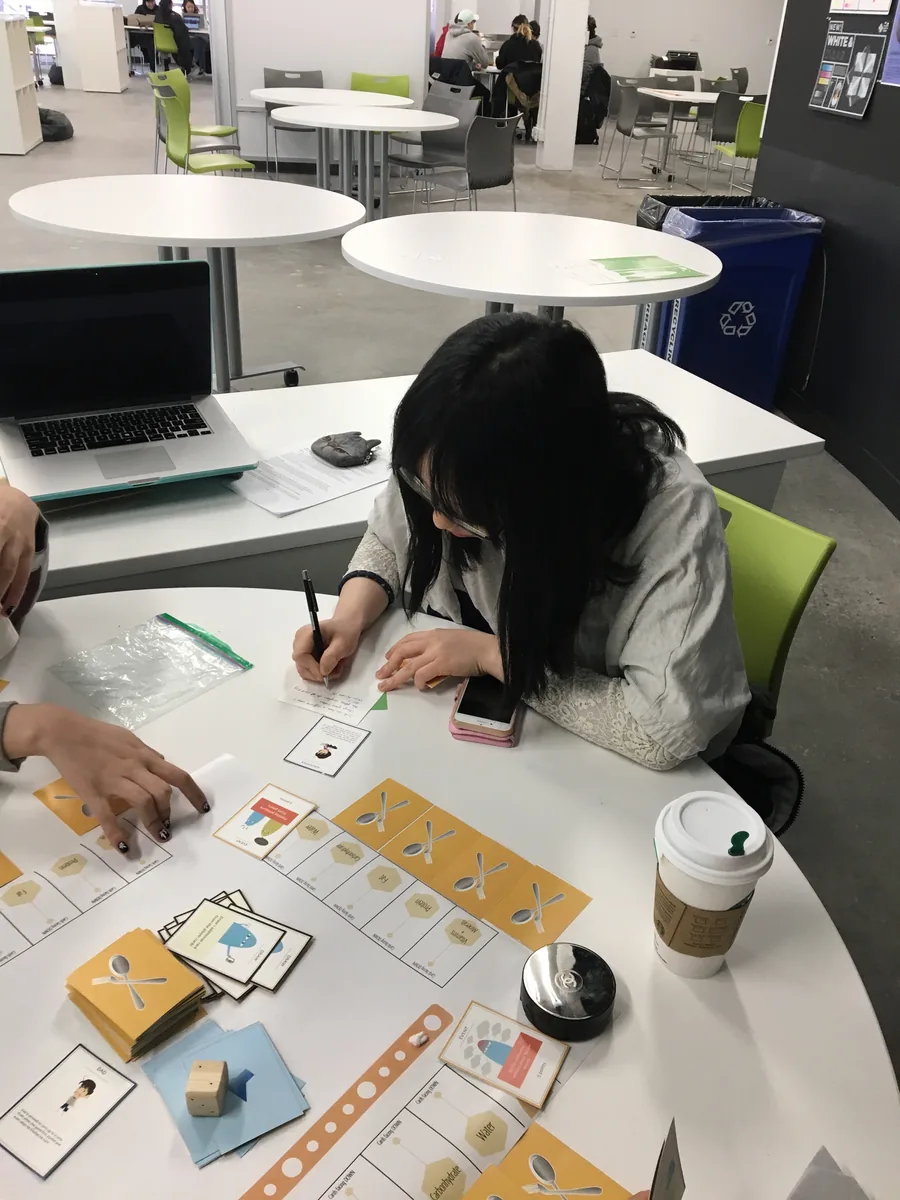
Playtesting with a mixed group of designers and non-designers revealed the game's real value: players began sharing personal stories unprompted, from family comments about weight to unrecognized dieting behaviours.
The experience validated the educational premise, while feedback on structure, visual language, and point system shaped the final version. One key finding: the game is most impactful when facilitated by a mental health professional
Design Iterations
Talkie → Eddie
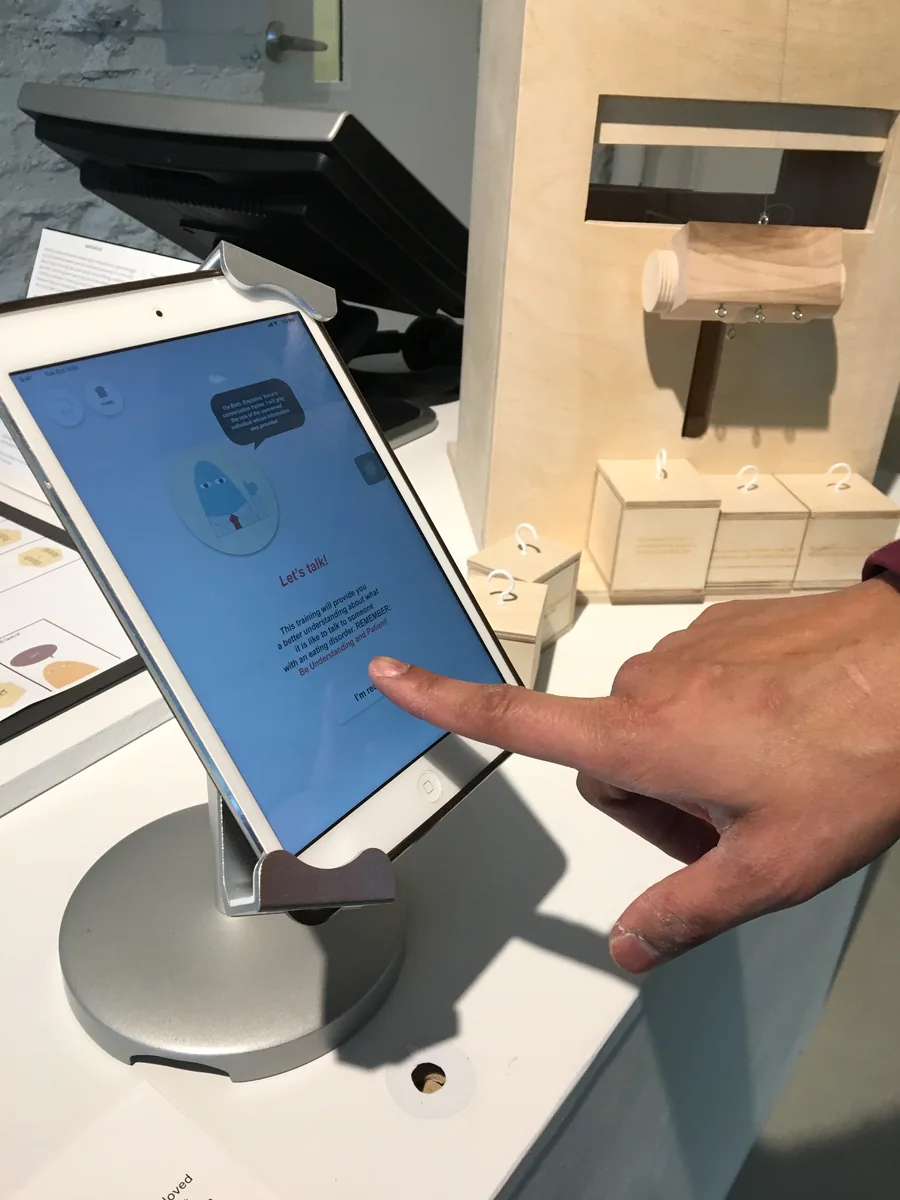
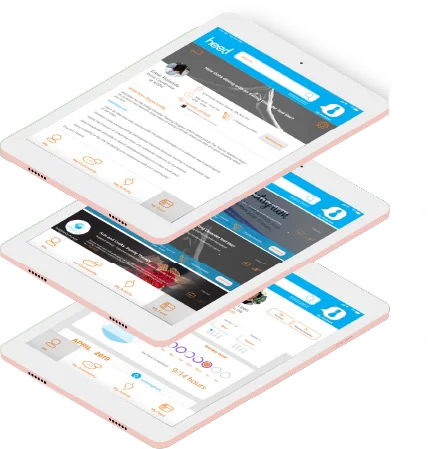
The app evolved through two iterations and a complete rebranding. The first focused on eating disorder education, empathy quizzes, and an AI persona system. The second expanded into a network connecting patients, families, and therapists - with direct AI conversation training at its core.
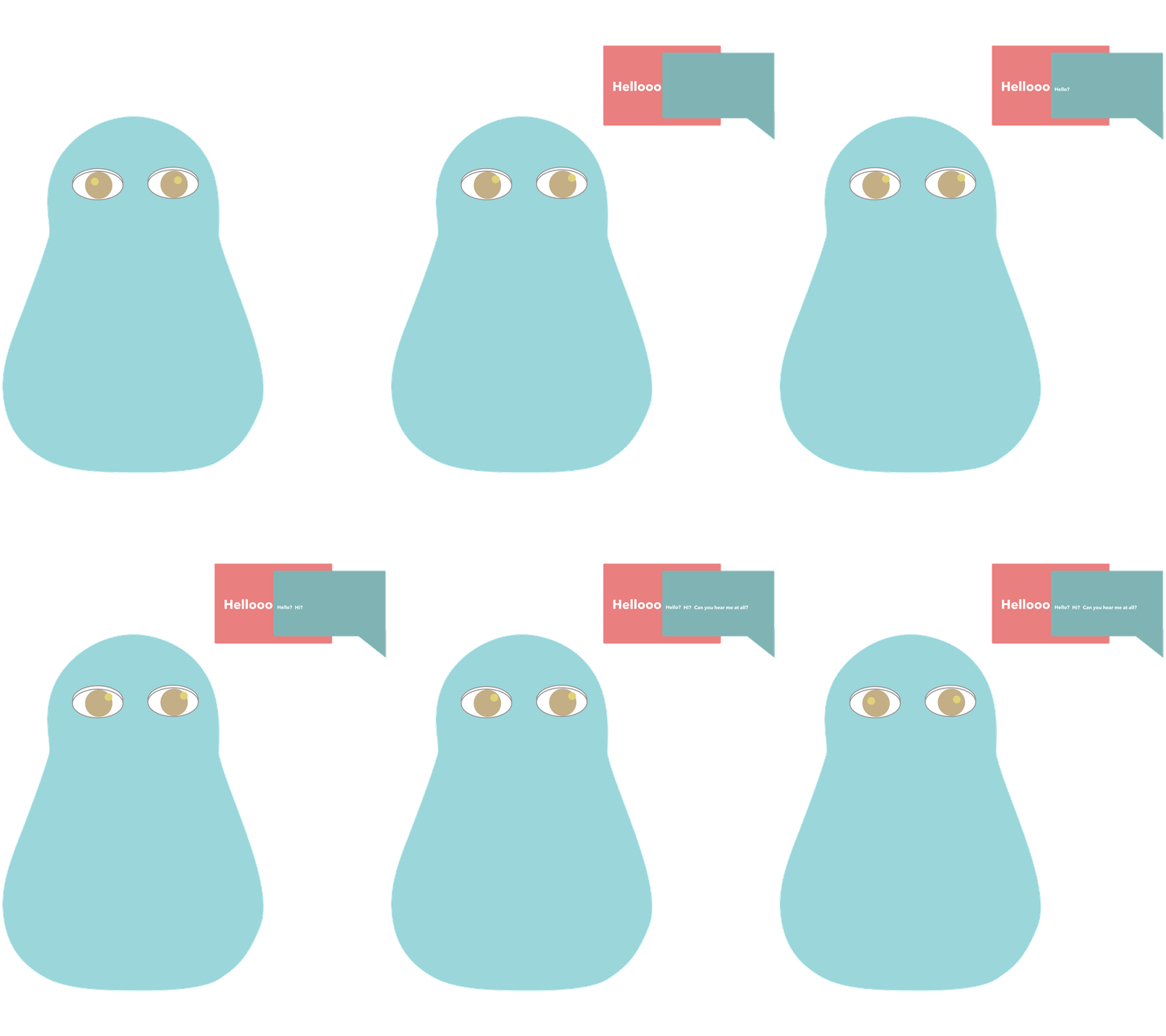
The chatbot became Eddie, a neutral AI character inspired by EVE from Wall-E, who guides users through communication training with HEED. Eddie's emotions are expressed entirely through his eyes - a deliberate choice for a project about learning to truly see one another.
Outcome

Outcomes
Testing spanned 15 participants across the three outcomes - 8 played the board game across two sessions; 7 tested the reflection kit and companion app.
The board game demonstrated its own educational efficacy - gameplay intensified into real accusation and disclosure dynamics, and players shared personal experiences with body image and disordered eating unprompted.
Facilitated supervision surfaced as a structural requirement, not a caveat - every participant who played agreed a mental health professional needed to be present.
Exhibition feedback validated the concept's real-world relevance - visitors and professional panels recognized the disorder in themselves or others; professionals were especially curious about the app's AI-driven approach.
The three outcomes functioned as an interconnected support system - public/group tools (Weight of Words, the board game) paired with a private, ongoing tool (the app) proved the multi-touchpoint design thesis, not any single piece alone
Reflection
Ethical constraints shaped the research methodology - barred from contacting recovered patients directly due to relapse risk, I relied on two personal disclosures, professional interviews, and anonymized support-group data: aggregate insight, not individual narrative.
Future iterations would pursue research access more deliberately - with a small team and proper supervision, I'd seek ethics approval to reach recovered patients directly, but would still treat that access as something that requires mindful operations
Solo leadership required architecting the entire process end-to-end- setting my own deadlines, staying honest about what I could realistically do, and knowing when to outsource (3D printing, packaging) so I could focus on design and research myself.
This project demonstrates my capacity for independent research and design - I can scope and run a design process independently, and source real information responsibly even when the people most affected are hardest to reach.