

We built SOMA to do what no one has done before - turn your body's own warning signals into a health bar, so you can see the crash coming before it takes you offline.
MY ROLE
UX ResearchPrototypingUsability testing
I built and distributed the user research survey, contributing to the data that shaped SOMA's core systems. Working closely with the team on analysis, I then took ownership of the escalation flow - one of the system's most critical interactions, where SOMA detects an incoming crash and automatically briefs the user's support network before they hit their limit.
The Vision
Everything else treats the crash. SOMA prevents it.
Not by telling you to breathe more. Not by flooding you with graphs. But by finally turning on the minimap — giving you the same situational awareness in real life that you'd never play a game without.

Life doesn't have to be a blind playthrough. Not when you have SOMA
We didn't design for a hypothetical user - We are the user.
We approached SOMA as a translation problem: take raw biometric signals, surrounding environmental cues, and render them as something emotionally legible: a health bar, a battery level, a status card that actually means something
DESIGN FEATURES
SOMA's HEALTH BAR
Real-time mood displays
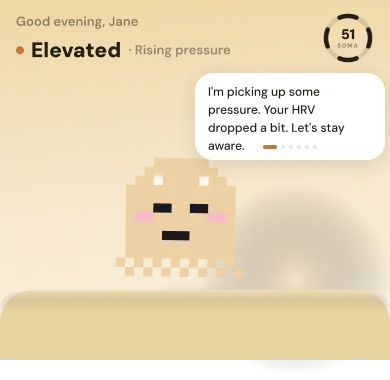
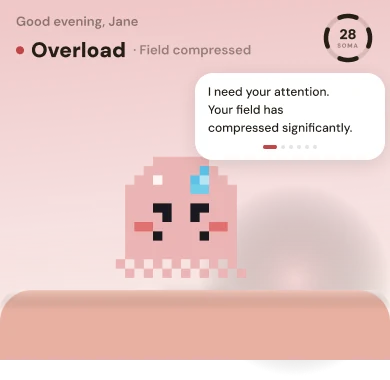
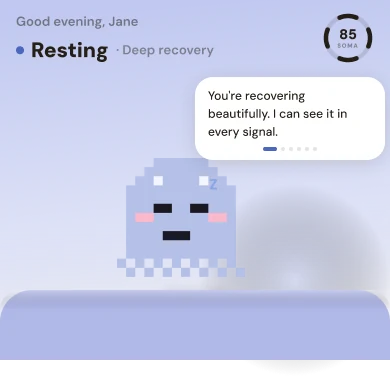
Real-time status score derived from HRV, EDA, and heart rate
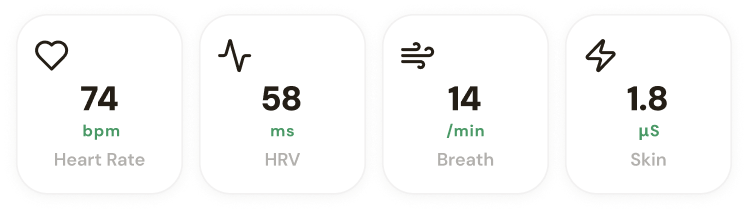
SOMA's SURVIVAL PACK
A personalized comfort toolkit built from your own pattern data — breathwork, playlists, quiet spaces.
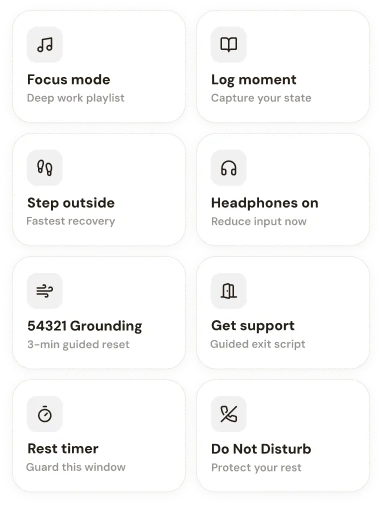
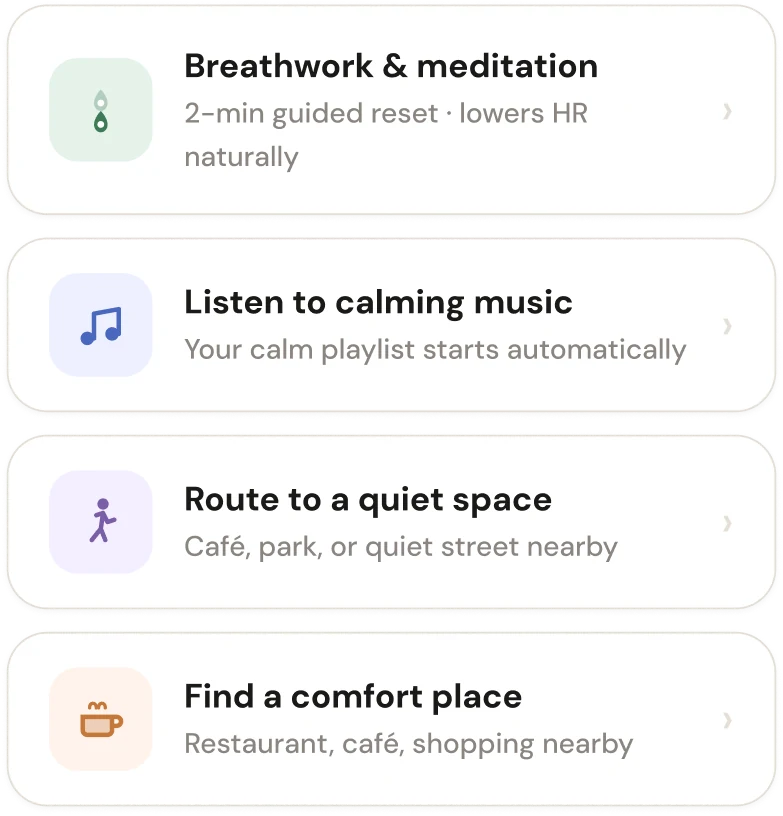
Actionable choices that eventually turn into your comfort toolkit
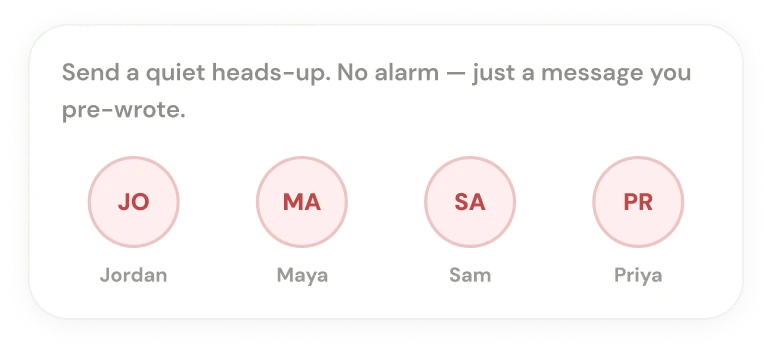
SOMA's PLAYBOOK
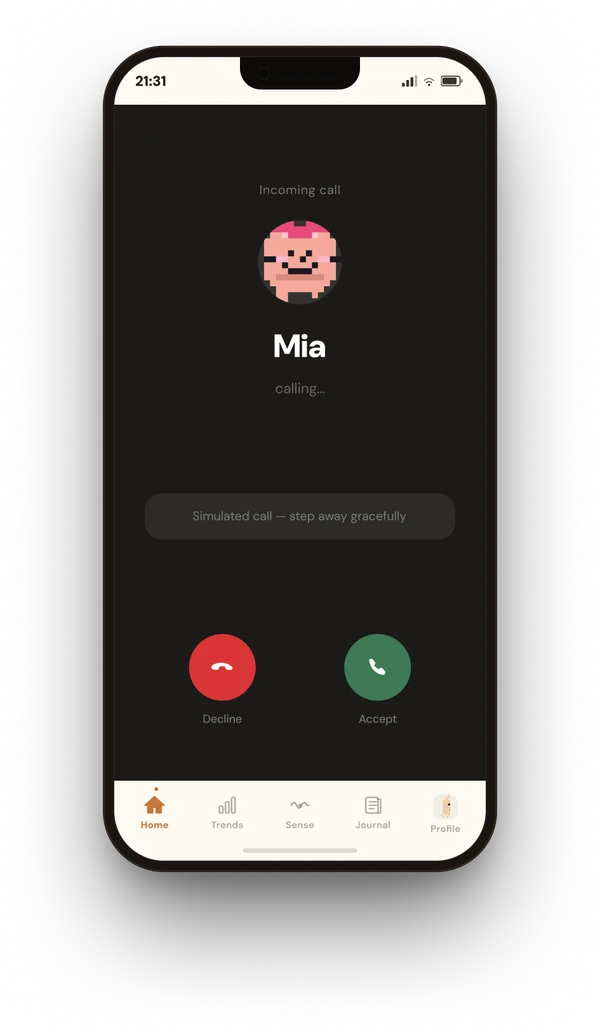
An auto-brief is sent to your support network as soon as your status drops to critical. SOMA can also simulate a call to help you step out of the situation briefly.
RESEARCH
Games gave us health bars.
We thought real life deserved one too
33%survey responders experience regular sensory overwhelm without any warnings
Overstimulation feels like I'm constantly holding my breath... my brain feels like static.
Like being stuck in a tube - my body is muffled but everything else is super loud
Bees in my bones and I can feel every inch of my skin... as if I can feel each cell.
We asked real people first, then let the data lead the build
We prototyped the full experience in Figma, built the visual language around a retro pixel/game HUD aesthetic, and grounded everything in primary research (n=65) plus peer-reviewed literature from American Psychological Association, CASAT and wearables studies on biometric stress detection.
Mapping how a crash develops
From the first signal to overwhelm, and where SOMA intervenes
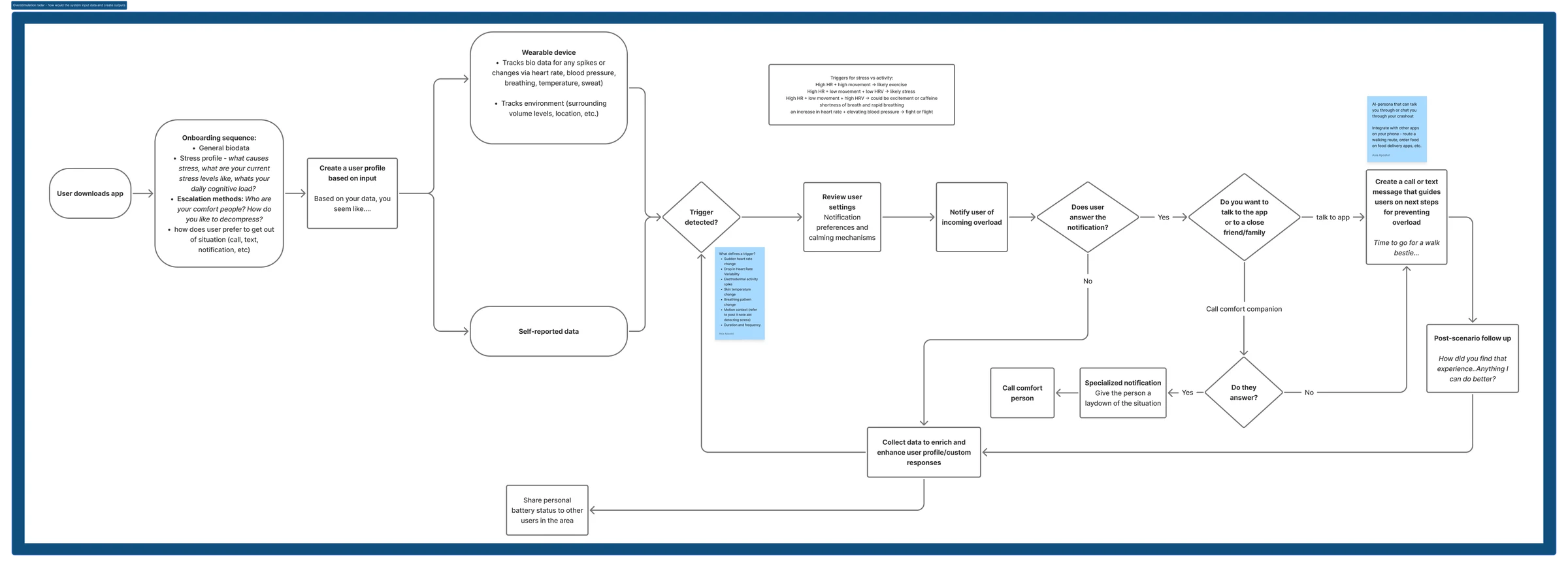
How SOMA reads the body and responds before a crash
SOMA learns a user's stress profile, then reads biometric and contextual data to detect real overload versus normal activity. It notifies the user first, escalates to a support person if there's no response, and refines its accuracy with every interaction
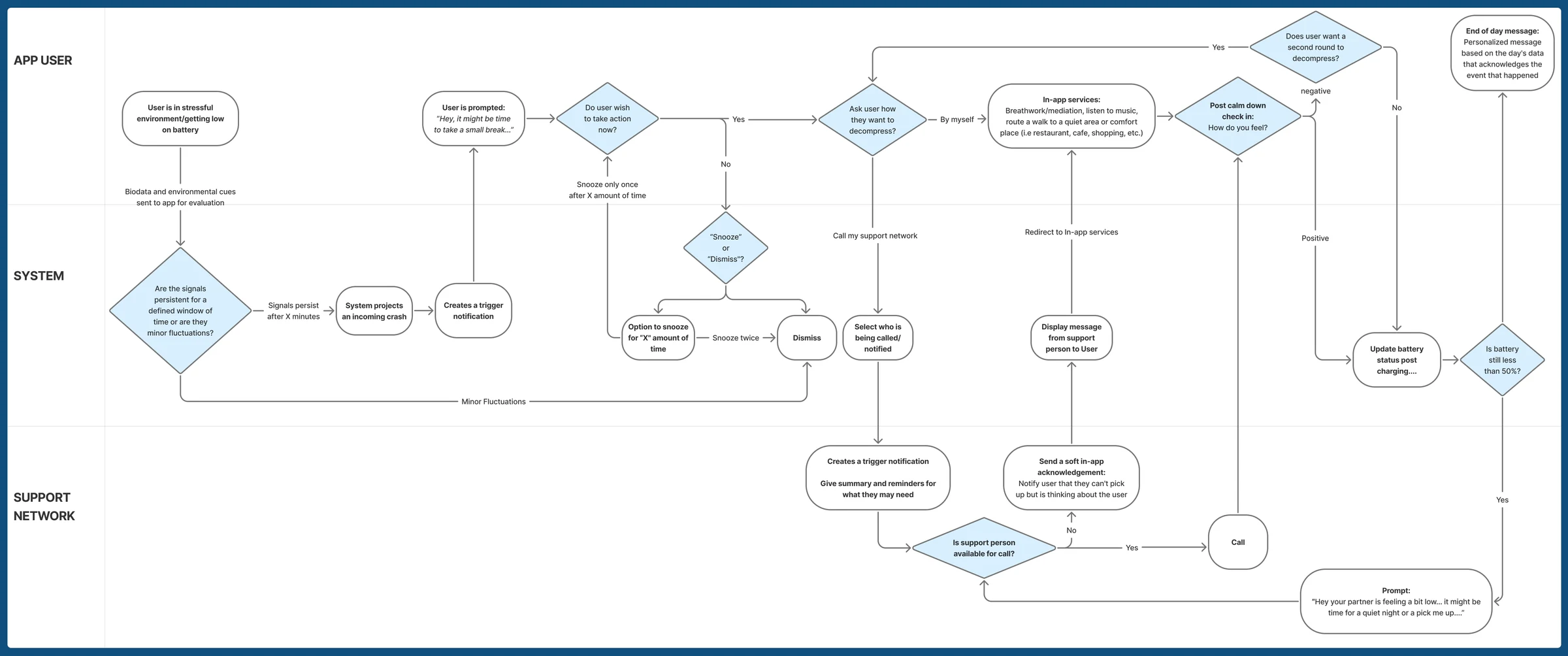
Escalation flow — what happens when SOMA detects an incoming crash
The system flags persistent stress signals and prompts the user to take a break. If they choose to act, SOMA routes them either to in-app calming tools or to a chosen support person, who's notified, briefed, and given the option to call. After the moment passes, SOMA checks in, offers a second round if needed, and closes the day with a personalized summary of what happened.
Let SOMA be your unique companion
Build your own SOMA
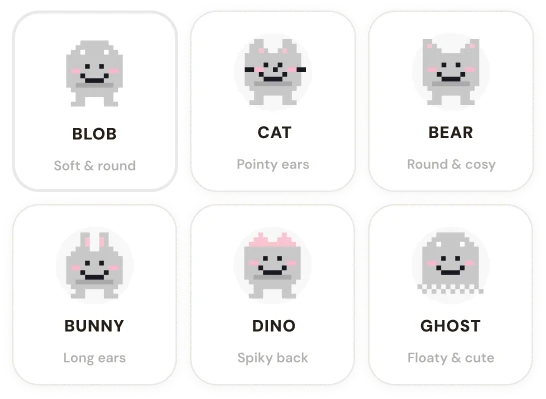
1. PICK YOUR FAVOURITE SOMA MASCOT
2. DRESS YOUR MASCOT
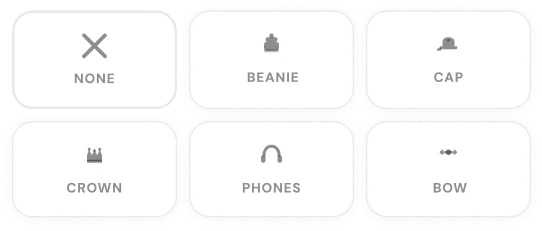
3. GIVE YOUR MASCOT A NAME
Let SOMA know what you need
You set up your build - what brought you here, what you want SOMA watching for, and which device carries it.
The more you use it, the more it learns you
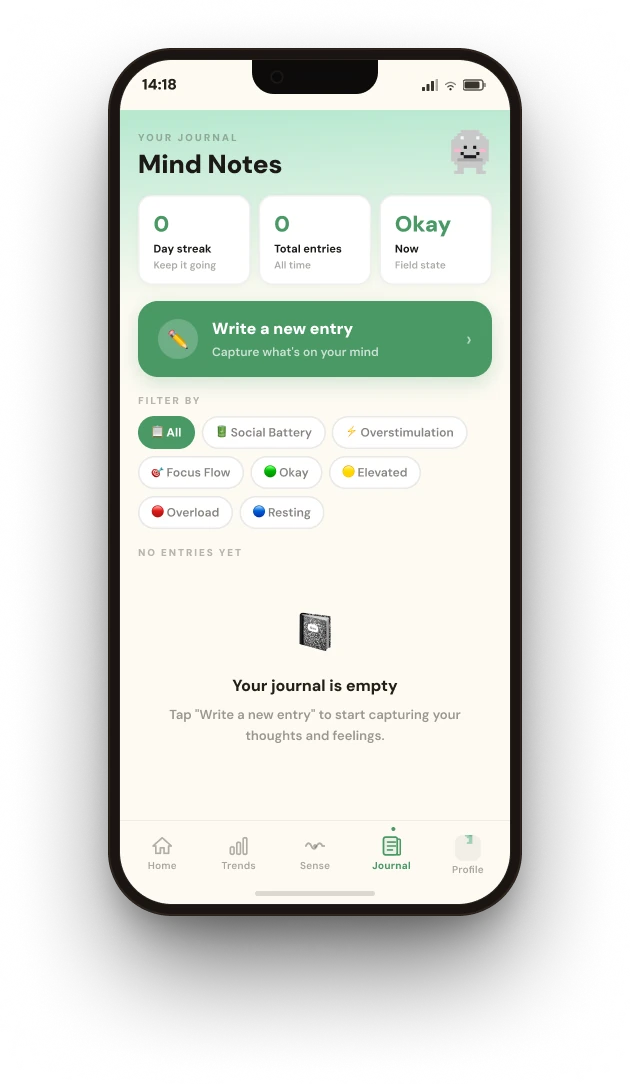
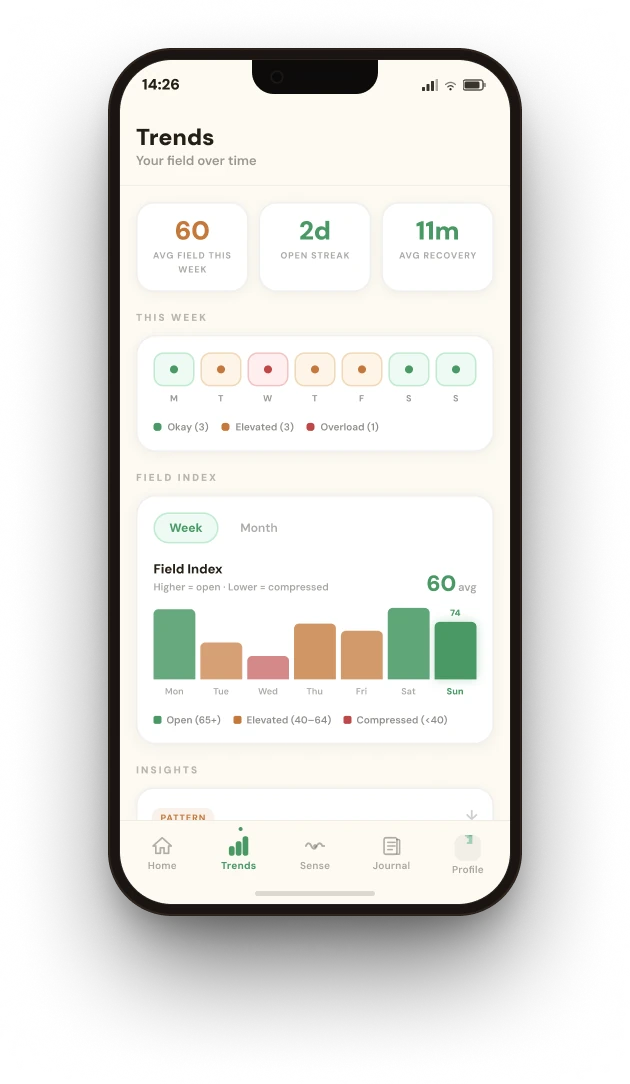
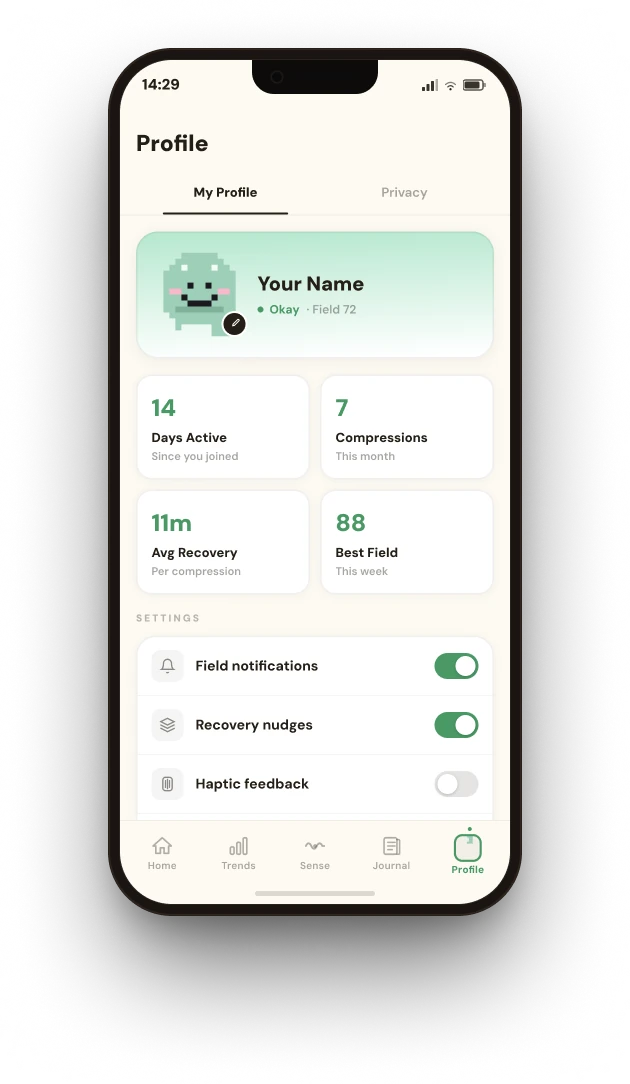
The longer you play, the better SOMA gets at reading you. Every journal entry, mood check-in, and weekly pattern feeds back into the system - so it's not just tracking your progress, it's learning what actually works for you. Set a goal, and SOMA levels up alongside you, sharpening its recommendations the more it learns your patterns.
Outcomes
Shipped a tool we'd actually use ourselves: built from our own lived experience with these crashes, not a hypothetical user
Debugged and refined the AI-generated code by hand, catching the small but load-bearing issues it quietly introduced
Landed on a clear product thesis: SOMA doesn't treat the crash, it prevents it - building situational awareness before the moment hits
Takeaways
The hardest part of this build wasn't the code; it was the language - describing an internal state precisely enough for both an AI and an app to read it
We learned to design against ourselves as the test case, catching what a hypothetical user never could have flagged
We learned that the best tools disappear - SOMA should run quietly in the background, not become one more thing to manage